-
-
Recent Posts
-
-
How Long Should You Keep Business and Tax Records in Canada
-
When Do You Need to Register for a GST/HST Number?
-
Withholding Tax – Non-Residents of Canada
-
Tax Season: How To Plan Ahead
-
-
-
Categories





Date: November 11, 2026
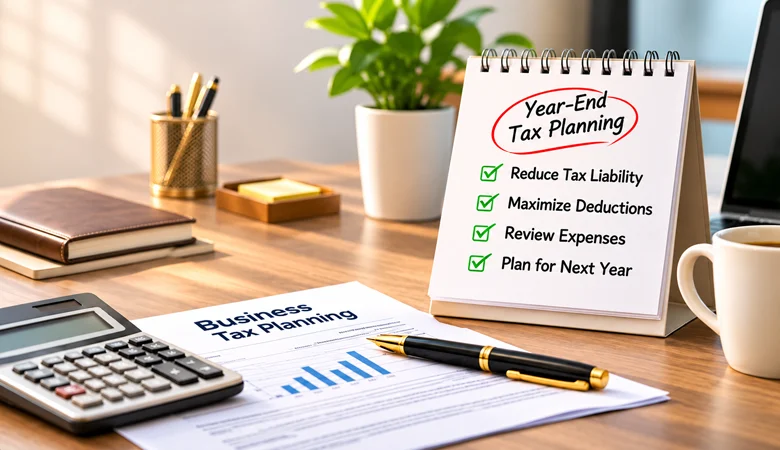
The last few months of the year are your best chance to lower your tax bill legally. Once December 31 passes, most of the decisions that shape your return are locked in. A year-end review gives you room to time expenses, choose how to pay yourself, and fix bookkeeping gaps before your accountant starts on the return.
This checklist is written for owners of sole proprietorships and small corporations with a December 31 year-end. If your corporation uses a different fiscal year-end, the same steps apply, just in the months leading up to that date.
1. Get Your Books Up to Date
Every planning decision depends on knowing where your numbers stand. If your bookkeeping is months behind, you’re guessing at your profit, and guessing makes it hard to plan anything.
Before you do anything else:
- Reconcile every bank and credit card account to the latest statement
- Record all sales, expenses, and owner draws
- Follow up on unpaid customer invoices
- Separate any personal transactions that slipped into business accounts
If catching up feels like too much, our accounting and bookkeeping team can bring your records current so you can plan with real figures.
2. Review Your Profit and Estimate Your Tax
Once your books are current, project your income to the end of the year. A rough estimate of your net profit tells you whether you’re facing a large tax bill or a modest one, and how much room you have to act.
This is also the moment to compare this year against last year. A big jump in profit may mean higher instalments next year, while a drop may mean you can reduce them.
3. Time Your Expenses and Equipment Purchases
Expenses you incur before year-end reduce this year’s taxable income. If you already plan to buy supplies, renew software, or pay for repairs, doing it in December rather than January can bring the deduction forward by a full year.
Larger purchases like computers, vehicles, and equipment are claimed through capital cost allowance rather than expensed all at once. The asset generally needs to be available for use before year-end to qualify for a claim this year. The CRA explains the classes and rates in its guide to claiming capital cost allowance.
Only buy what the business actually needs. Spending a dollar to save thirty cents in tax is still a loss.
4. Decide How to Pay Yourself
If you own a corporation, the way you take money out of it is one of your biggest planning decisions. Salary creates RRSP room and CPP contributions and is deductible to the corporation. Dividends carry no payroll obligations but don’t build RRSP room.
Points to settle before December 31:
- Whether to pay a year-end bonus or salary top-up
- Whether to declare dividends this year or next
- How family members involved in the business are paid, keeping the tax on split income (TOSI) rules in mind
For a deeper comparison, read our guide on dividend vs. salary payments.
5. Check Shareholder Loan Balances
Money you’ve taken from your corporation that wasn’t recorded as salary or dividends usually sits in your shareholder loan account. If you owe the company money, the balance generally needs to be repaid within one year after the corporation’s year-end, or it may be added to your personal income.
Review this balance now so there are no surprises when your accountant prepares the corporate return.
6. Prepare for Payroll Year-End
If you have employees, year-end brings extra filing work. T4 slips and the T4 summary are generally due by the last day of February, and errors are easier to fix in December than in a rush.
Confirm that:
- Employee names, addresses, and SIN details are current
- All source deductions have been remitted
- Taxable benefits, like a company vehicle or gift cards, are recorded
7. Review GST/HST and Instalments
Look over your GST/HST filings for the year. Make sure you’ve claimed input tax credits on business purchases and that your supplier invoices contain the details needed to support those claims.
If you pay personal tax by instalments, the final quarterly payment for individuals is due December 15. The CRA lists the dates and options on its required tax instalments page. Missing it can lead to interest charges.
8. Make Personal Tax Moves Too
Your business and personal taxes are closely linked, especially for self-employed owners. A few personal steps can make a real difference:
- Make charitable donations by December 31 to claim them this year
- Plan your RRSP contribution, which can be made up to 60 days after year-end
- Use any available TFSA room for the new year
- Gather receipts for medical, childcare, and other personal credits
9. Clean Up Your Records
Write off customer accounts you know won’t be collected, count your inventory if you carry stock, and file your receipts in one place. Good records support every deduction you claim and save time when filing.
Our post on preparing your business for Canadian tax season walks through what to have ready once the new year starts.
Plan Your Year-End with Wales Accounting
Year-end planning works best when it starts early, before the options disappear. A short review in November or December can uncover savings that would be gone by February.
Wales Accounting helps small business owners in Richmond Hill and across the GTA plan ahead and file with confidence. Learn more about our income tax filing services, or contact us to book your year-end review.
Categories: Blog
